Master Your Next Interview: What to Say and What to Avoid
Vanguard Club
Self Development
min read

Master Your Next Interview: What to Say and What to Avoid
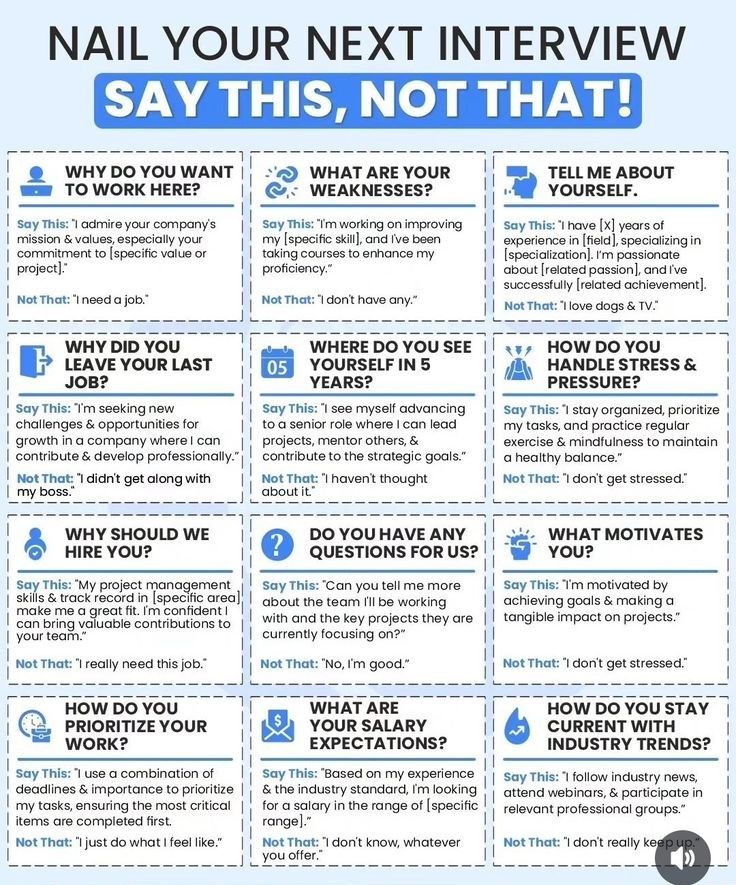
Job interviews can be nerve-wracking, but with the right preparation, you can confidently navigate even the toughest questions. The key is to be prepared with thoughtful, strategic answers that highlight your skills and professionalism.
The following guide, inspired by the principles in the provided image, breaks down how to answer ten of the most common interview questions. We’ll cover what to say to impress your interviewer and what to avoid preventing common missteps.
1. Why Do You Want to Work Here?
Say This: “I admire your company’s mission and values, especially your commitment to [specific value or project].”
Why It Works: This response shows that you’ve done your research and are genuinely interested in the company, not just a job. It connects your personal values to the company's, making you seem like a great cultural fit.
Not That: “I need a job.”
Why It Fails: This answer is generic and unprofessional. It signals that you’re not invested in the company itself, but rather just looking for any employment.
2. What Are Your Weaknesses?
Say This: “I’m working on improving my [specific skill], and I’ve been taking courses to enhance my proficiency.”
Why It Works: This is a classic example of turning a negative into a positive. By naming a specific skill you're actively working to improve, you demonstrate self-awareness, a growth mindset, and a commitment to professional development.
Not That: “I don’t have any.”
Why It Fails: This answer is untruthful and shows a lack of self-awareness. It can make you seem arrogant or uncoachable. Everyone has areas for improvement.
3. Tell Me About Yourself.
Say This: “I have [X] years of experience in [field], specializing in [specialization]. I'm passionate about [related passion], and I’ve successfully [related achievement].”
Why It Works: This is an excellent way to start with a summary of your professional life, connecting your experience and passion to a specific, measurable achievement. This approach, often called the "present-past-future" method, helps you share a concise, compelling narrative.
Not That: “I love dogs and TV.”
Why It Fails: While your hobbies are a part of who you are, they aren't relevant to the professional context unless they directly relate to the job. This answer can make you seem unprepared and unfocused.
4. Why Did You Leave Your Last Job?
Say This: “I’m seeking new challenges and opportunities for growth in a company where I can contribute and develop professionally.”
Why It Works: This answer is positive and forward-looking. It frames your departure as a motivated decision to advance your career, rather than an escape from a bad situation.
Not That: “I didn’t get along with my boss.”
Why It Fails: Never speak negatively about a former employer, boss, or coworker. It makes you seem difficult to work with and can be a major red flag for hiring managers.
5. Where Do You See Yourself in 5 Years?
Say This: “I see myself advancing to a senior role where I can lead projects, mentor others, and contribute to the strategic goals of the company.”
Why It Works: This response demonstrates your ambition and commitment. It shows you're thinking about your long-term career growth within the company, which suggests you'll be a dedicated, long-term employee.
Not That: “I haven’t thought about it.”
Why It Fails: This answer signals a lack of foresight and career planning. It may also suggest a lack of enthusiasm for the role and the company.
6. How Do You Handle Stress and Pressure?
Say This: “I stay organized, prioritize my tasks, and practice regular exercise and mindfulness to maintain a healthy balance.”
Why It Works: This is a great, comprehensive answer that shows you have both professional strategies (prioritization, organization) and personal self-care habits. It reassures the interviewer that you can handle a high-pressure environment without burning out.
Not That: “I don’t get stressed.”
Why It Fails: Everyone experiences stress. This response is untruthful and shows a lack of self-awareness. It can also suggest that you aren't being honest about your abilities.
7. Why Should We Hire You?
Say This: “My project management skills and track record in [specific area] make me a great fit. I’m confident I can bring valuable contributions to your team.”
Why It Works: This is your chance to sell yourself. This answer is confident, specific, and focuses on the value you can bring to the company. Use the STAR method (Situation, Task, Action, Result) to provide a concrete example of your skills in action.
Not That: “I really need this job.”
Why It Fails: This response focuses on your personal need rather than the company’s need. It doesn’t tell the interviewer why you are the best candidate for the job.
8. Do You Have Any Questions for Us?
Say This: “Can you tell me more about the team I’ll be working with and the key projects they are currently focusing on?”
Why It Works: Asking thoughtful questions shows you are engaged and genuinely interested in the role. This question demonstrates that you’re not only thinking about the job but also about how you can fit into the team and contribute effectively.
Not That: “No, I’m good.”
Why It Fails: This can be a missed opportunity. Not asking questions can be interpreted as a lack of interest or preparation.
9. What Are Your Salary Expectations?
Say This: “Based on my experience and the industry standard, I’m looking for a salary in the range of [specific range].”
Why It Works: This answer is strategic and professional. It shows you have done your research on market rates and are confident in your value. Providing a range gives you flexibility and can open a productive negotiation.
Not That: “I don’t know, whatever you offer.”
Why It Fails: This answer can make you seem unprepared and may result in a lower-than-fair salary offer. It’s important to know your worth and be prepared to articulate it.
10. How Do You Stay Current with Industry Trends?
Say This: “I follow industry news, attend webinars, and participate in relevant professional groups.”
Why It Works: This response demonstrates your passion for your field and your commitment to continuous learning. It shows you are proactive and dedicated to staying at the forefront of your industry.
Not That: “I don’t really keep up.”
Why It Fails: This is a major red flag. It suggests a lack of passion and a failure to take your career seriously.
By using these strategies, you can transform your interview from a stressful experience into a confident, professional conversation. Good luck!
Stay informed with the latest guides and news.